

Candle glowing on a Christmas wreath with soft lights in the background

When December Holds Both Joy and Grief: Finding Hope and Comfort at Christmas

Many of us enter December with unmet expectations. Many people search for Christmas joy while carrying grief at the same time. The holidays can stir memories of loss, loneliness, and family changes, even when we long for peace and connection. If you are navigating grief at Christmas or walking through a holiday season that looks different from the one you imagined, you are not alone.

Searches rise every year for phrases like how to handle grief during the holidays, finding joy when Christmas feels hard, and Christian encouragement for grief at Christmas. These searches reveal how many people feel both joy and sorrow in December. The season can hold tender memories, unspoken expectations, and a longing for hope that feels out of reach.

They call this the most wonderful time of the year, yet many of us step into December carrying expectations we cannot meet. We picture the Hallmark version of the holidays. A glowing home. A happy family gathered around a table. Laughter. Warm connection. Simple joy. Life does not always follow that picture. Not every family feels united. Not every heart enters December with ease.

Some walk into this season with loss. Some feel the ache of an empty seat at the table. Some face a home that changed in ways they never expected. Some feel lonely while the world celebrates. Some hold joy and grief at the same time.

I love Christmas. I love the lights and the wonder. Yet this month carries sorrow for me. Both my husband and my mother died during the Christmas season. Not in the same year, yet close enough that grief settled into this time of year.

I did not understand how deeply my children carried it until much later. Every year, right after Thanksgiving, something shifted in our home. The atmosphere felt heavy. My children grew emotional and easily upset. Arguments surfaced. Restlessness filled the days. I could not name it at the time. Yet the pattern returned every year. Beginning at Thanksgiving. Easing on Christmas Eve.

Over time I recognized what their hearts kept trying to express. They moved toward the anniversary of their dad’s death. They did not have words for it. Their emotions remembered what their minds could not explain. The weight of it shaped the entire month. And every Christmas Eve, the day he died, the tension loosened. Not gone, yet lighter.Light enough for us to breathe. Light enough for joy to find us during Christmas Eve and Christmas Day. Joy did not replace grief. Grief did not replace joy. They remained side by side.

The Real Story of December

We do not need to force holiday joy. We do not need to match a perfect picture to belong in this season. We do not need to hide the truth of our hearts for joy to reach us. Biblical joy never depended on perfect circumstances. It does not silence sorrow.

It grows in the very places where we lean on God. Joy entered a world marked by pain and loss. Joy stepped into darkness and claimed it from within. Joy arrived where hope was weary.

If This Season Feels Heavy

So if December feels complicated for you, you are not alone. If joy rises slowly, you are not alone.

If grief returns in ways you did not expect, you are not alone. Joy does not wait for a perfect story. It does not require a life without pain. Joy simply invites you to remember that God stays near. He stays with you in the memories, in the heaviness, in the waiting, and in every part of this season.

This year I am learning to let joy and grief walk together. I am learning that both can remain without fighting for space. And I am learning that the joy God gives stands firm even when my heart feels tired.

If this season feels tender for you, I pray you sense His care. I pray you notice small moments of joy along the way. I pray you remember how deeply loved you are.

How Gratitude Changes the Way You See Your Life


“The eye is the lamp of the body. If your eyes are healthy, your whole body will be full of light.” Matthew 6:22

Jesus used the eye as a metaphor for our inner focus. What we choose to look at shapes how we see everything around us. When our attention rests on God’s goodness and the blessings around us, our outlook begins to change. The shift of focus gives birth to gratitude. Gratitude becomes more than a feeling; it becomes the lens through which we see life.

What Are You Looking At?

When life feels heavy or progress seems slow, I often hear God ask me a familiar question: “Famia, what are you looking at?”

I remember one time when I answered Him honestly. I told Him about all the things I was seeing, every worry, every problem my children were facing, every situation that seemed impossible. I listed them all, one by one, until my heart felt heavier just from speaking them.

Then the Lord spoke to my spirit and said, “Your eyes are on the wrong thing. If you look up to Me and trust Me with those burdens, you will not feel so weighed down. I never meant for you to carry this alone. Let me take the weight you have been trying to bear on your own.  I am your Shepherd, and I will lead you on the path to peace. You only need to follow me.

That moment changed my focus. I realized that which fills my vision shapes the condition of my heart. Gratitude did not come easily. I had to learn it. I had to make a choice each day to look for reasons to thank God. Overtime, that intentional focus began to reshape how I saw my life.  Gratitude is what helped me shift my focus toward His faithfulness. I started to notice blessings I had overlooked.  It turned my attention from what was missing to trusting that God was working even when I could not see it.

Gratitude and the Mind

Science continues to confirm what Scripture has long taught. Gratitude can literally rewire the brain. When we practice thankfulness, the mind releases dopamine and serotonin, chemicals that create a sense of peace and joy. Over time, these pathways grow stronger, helping us notice what is good instead of what is lacking.

Studies have shown that when people think about something they are grateful for, their minds shift away from pain. Gratitude redirects attention from what hurts to what helps. It activates areas of the brain connected to comfort and healing, allowing peace to settle where tension once lived.

Romans 12:2 reminds us to be transformed by the renewing of your mind. Gratitude is one way that renewal happens. Each time we choose to thank God, we strengthen a pattern of trust and hope. Gratitude does not remove pain, but it brings peace into it. It calms  the mind and anchors the heart in truth that God is still working, still providing, and still faithful.

When We Lose Focus

An ungrateful heart often stares at what is lacking. We see other people’s blessings and forget our own. That kind of vision breeds envy, resentment, and comparison. It clouds our perspective like a darkened room.

When I began writing down small blessings, a sunrise, a kind word, an unexpected moment of laughter, I noticed joy returning. What I looked at changed what I felt. Gratitude taught me that peace grows when I pay attention to God’s presence, not my problems.

Gratitude as Spiritual Light

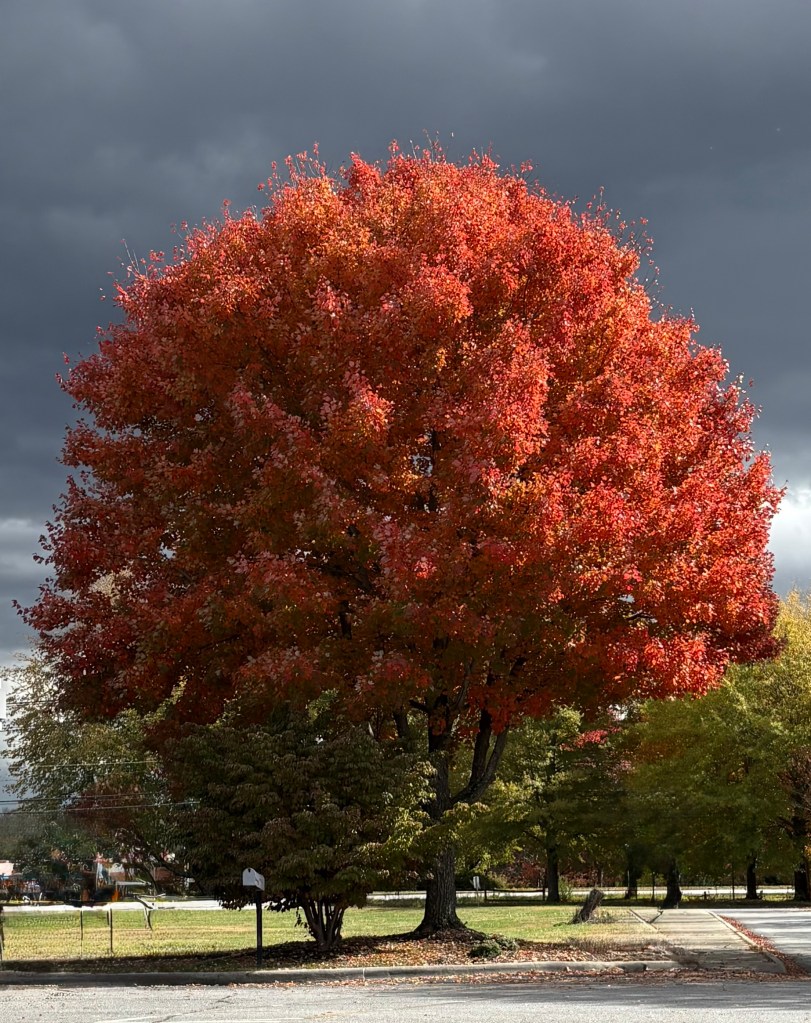
Gratitude changes how we walk through life. It turns our attention to God’s presence in every moment. Gratitude fills the heart with peace and brings the mind to rest in truth. When we look for His goodness, joy begins to rise. God remains with us through every struggle, and gratitude keeps our focus on Him and fills the heart with peace. We notice Him everywhere. During the fall season in western North Carolina, the Blue Ridge Mountains are covered in God’s glory. People travel from all over just to stand awe of it. Yesterday, while walking to my car, I noticed a tree glowing in the most vivid orange I have ever seen. In that moment, I felt joy and gratitude for simply being allowed to witness it. I was amazed at all the people that walked right by and didn’t give it a second glance.

Jesus knew that where we fix our eyes shapes the light we carry. When our focus rests on Him, our hearts stay full, our perspective clear, and joy grows within us. Gratitude does not deny difficulty it helps us see through the light of his faithfulness. When our eyes stay fixed on Him.

A Prayer for Perspective

“Lord, help me see the world through grateful eyes.

When my thoughts drift toward what is missing, draw me back to Your goodness.

Fill my heart with light so that I can reflect Your joy to others. Amen.”

Joy Spark

✨ List three moments today where you saw God’s light, even in the smallest details. Notice how your perspective shifts when you give thanks.

🍁Fall: The Season of Transformation

Fall is the season of transformation, when autumn foliage and the spiritual meaning of fall remind us to slow down, reflect, and notice God’s work in our lives. The brilliant reds, oranges, and golds bring joy to our days and remind us that every season has beauty and purpose. Walking through crunchy leaves, breathing in the crisp fall air, or sitting under a glowing tree canopy gives us space to pause and remember that God is present in every detail.

Fall also invites us to a slower rhythm. Sweaters and blankets come out, warm drinks fill our mugs, and evenings arrive earlier. It’s a natural time for reflection, a season that nudges us to let go of what we no longer need to carry. In 1 Peter 5:7 we read, “Cast all your anxiety on Him because He cares for you.” I’ve noticed that when I step into the woods on a fall day, anxiety has a way of slipping off my shoulders. You can’t walk under trees blazing with color, breathe in the crisp fall air, and listen to the crunch of leaves underfoot and still carry the same weight of worry. A walk in the woods becomes a kind of therapy. It slows the racing thoughts, quiets the heart, and reminds us that God is near.

This season is filled with the simple joys of nature. Families head to pumpkin patches, searching row by row for the pumpkins that will decorate their homes or be carved with care. Apple orchards invite us to pick crisp fruit and enjoy the sweetness of the autumn harvest season. These traditions may seem small, yet they teach us to slow down, celebrate the moment, and give thanks. Even as the trees let go of their leaves, God still fills our hands with good fruit. His faithfulness doesn’t end when change comes.

More than any other season, fall seems to invites us outside. It’s the perfect time to go for a hike or take a walk in the woods and stop to enjoy the beauty right in front of us. Driving along country roads or even the Blue Ridge Parkway offers stunning views, and it’s no wonder thousands come to see the changing leaves. Yet there’s something different about stepping out of the car and walking among the trees. The crunch of leaves underfoot, the stillness of the woods, and the glow of color all around can remind us that God’s presence is not just something to drive past. It’s something to enter into.

The fall season of transformation also carries a personal lesson. We each have areas where God may be asking us to release control. What expectations, fears, or burdens are you holding onto? Could this season be your invitation to loosen your grip and trust Him more deeply? The beauty of autumn reminds us that when one season closes, another is preparing to bloom.

As you take walks under colorful trees, sip warm cider, or spend time with loved ones, let these moments of joy point you back to God’s goodness. Transformation does not always mean rushing ahead. Sometimes it means resting in His timing, noticing His provision, and allowing His Spirit to shape us gently, like the turning of leaves.

Ask yourself:

  • What do I need to release into God’s hands this season?
  • Where can I slow down and notice His gifts in the everyday?

My Refuge

We live in unpredictable times.

Lately, we’ve seen massive floods, hurricanes, tornadoes, and war. It makes us stop and give pause. It makes us think about the things we value, the people we care about, the lives we lead.

With so much turmoil going on in the world, our job is to spread a lot of Jesus everywhere—especially in our own homes. Our job is to be an example of showing others that we have a peace that passes all understanding. It is incredibly important for us to stay focused and keep our eyes fixed on Jesus during this time.

Hebrews 12:2 says, “Let us run with perseverance the race marked out for us, fixing our eyes on Jesus, the author and perfecter of our faith.”

When we see a verse like this, it reminds us to prioritize spiritual things over worldly ones—even when everything around us looks terrible. It helps us walk through life’s difficulties with faith and perseverance.

Last year in North Carolina, we went through a devastating hurricane—Hurricane Helene. It caused so much destruction that nine months later, there were still piles of rubble. But I also saw people with faith come together and help in incredible ways. And right after that, we were hit with forest fires. The air was filled with smoke. Every day we were getting alerts about possible evacuations. We had to pack a go-bag and be ready.

I wasn’t really scared during the hurricane. But during the fires, I’ll be honest—I started to worry. I remember thinking, What am I going to take? Does this stuff even matter? What if my house is gone?

The fires were only fifteen minutes away from me, and the stress started to build. But I got to a point where I couldn’t live like that anymore. I couldn’t live in constant fear of what might happen next.

So I said, “Lord, I know You’re protecting us, and I have to trust You in this.”

And that gave me peace. I stopped worrying about the fires.

The Bible gives us a perfect example of someone overwhelmed by fear.

David had served King Saul faithfully, but Saul became jealous and wanted him dead. So David ran. He fled to Gath—the hometown of Goliath, the giant he had killed. Imagine how desperate he must have been to hide in enemy territory.

When the people of Gath recognized him, David panicked. He was so afraid that he pretended to be insane. He let saliva run down his beard, scratched at the doors, and acted like he’d lost his mind. The king of Gath wanted nothing to do with him and threw him out of the city.

At that point, David had escaped death more than once. He was running for his life, surrounded by enemies, unsure of where to go next. He had every reason to be anxious and afraid.

But instead of giving in to fear, David wrote a Psalm.

“I will bless the Lord at all times; His praise shall continually be in my mouth.”

—Psalm 34:1 (NKJV)

Worship helped him refocus. His situation hadn’t changed, but his perspective did. The danger was still real, but so was God. God didn’t remove him from the hard place, but He stayed with him through it.

David didn’t just survive that moment. He wrote about it. He gave us a window into what it looks like to run to God instead of running from fear.

“I sought the Lord, and He answered me; He delivered me from all my fears.”

—Psalm 34:4 (NIV)

This verse highlights the power of prayer and the comfort we can find in Him when we turn our focus away from fear and worry and onto trusting God that He will come through for us. For me. For you. And in whatever form that looks like. Sometimes it’s not even the way we think He should, but God will do it again.

God was the one who rescued David.

God was the one who protected, provided, and made a way—again and again.

And if He did it before, He can do it again.

The same God who showed up for David is still working today.

He still hears the cries of His people. He’s still present in pain. He’s still moving in uncertain times. And He’s still powerful—even when we feel powerless.

When nothing in life makes sense, you can still run to Him and find refuge.

Take a moment and think back.

Where has God been faithful to you?

Where has He protected you, provided for you, strengthened you, or encouraged you?

If you’re having a hard time seeing it right now, that’s okay. If praise doesn’t come easy today, open up Psalm 34 and let those words become your prayer.

If this blog has encouraged you, share it with others.

Share it with someone who you think would like to read it—or needs to read it.